Where are the herds?
| Months | Where to look | What's happening |
|---|---|---|
| December – March | Southern Serengeti & Ndutu | Lush short-grass plains; calving peaks around February, with lots of predator action. |
| April – May | Central & western Serengeti | Long rains; herds start moving north-west. Green season with fewer visitors. |
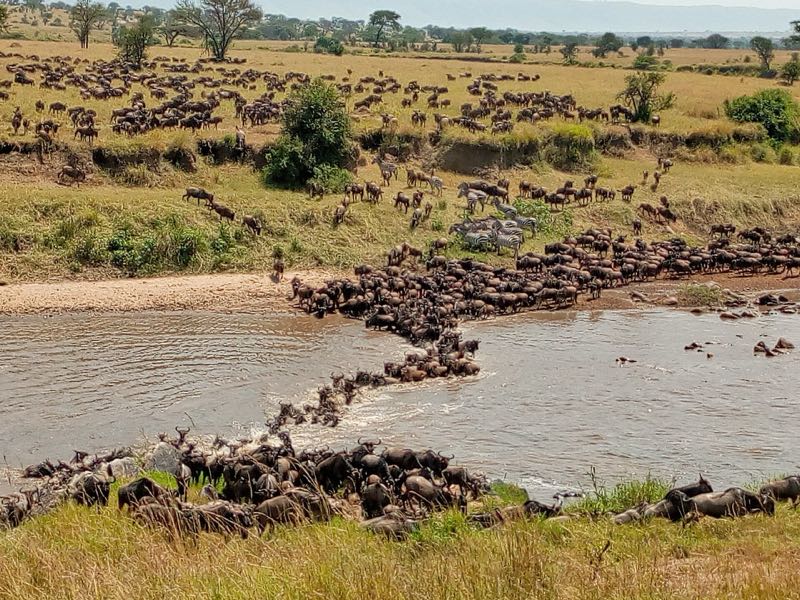
| June – July | Western Corridor | Herds gather and cross the Grumeti River. |
| July – October | Northern Serengeti (Kogatende) | Dramatic Mara River crossings. |
| November | Eastern & central Serengeti | Short rains; herds stream south again. |
These are typical patterns — the herds follow the rain, so timing changes every year. Our guides track the movements and position you accordingly.
How to plan a migration safari
Choose your season first: calving (January–March) for newborns and predators, or river crossings (July–October) for drama. Then allow at least three nights in the right area of the Serengeti. Flying between Arusha and Serengeti airstrips saves time if you're heading to the far north.
Frequently asked questions
When is the best time to see the Great Migration in Tanzania?
January–March for calving season in the south and July–October for Mara River crossings in the north. The migration is in Tanzania for most of the year.
Is a river crossing guaranteed?
No — crossings depend on the herds and can't be predicted exactly. Spending several days in the right area gives you the best chance.
How many wildebeest are in the Great Migration?
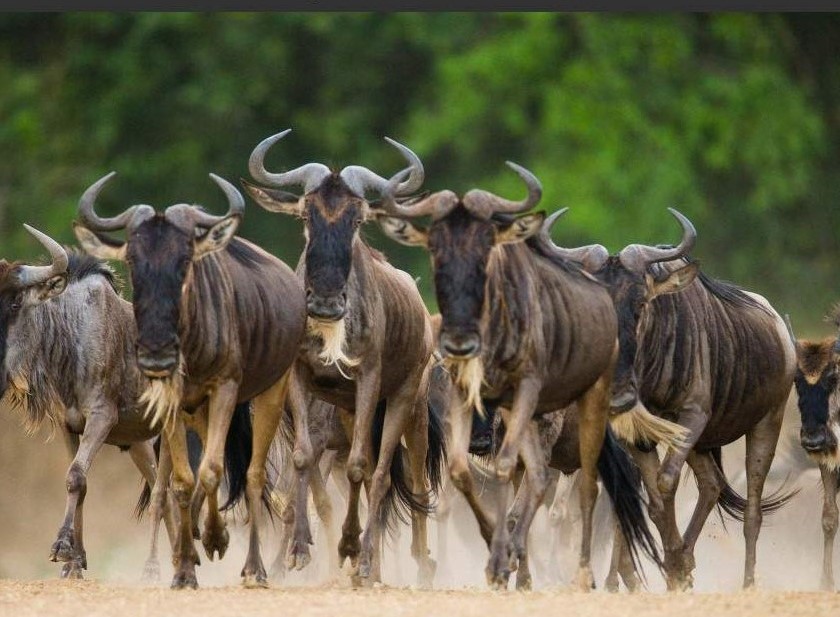
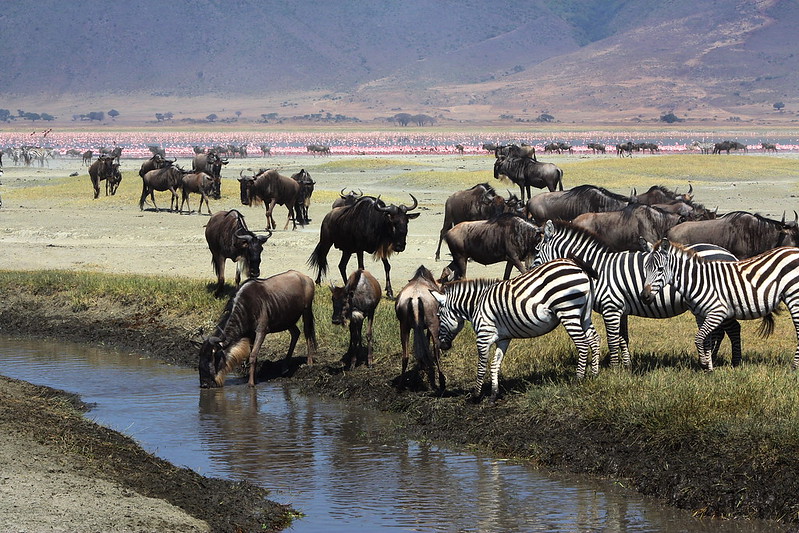
Estimates are typically around 1.3 to 1.5 million wildebeest, accompanied by hundreds of thousands of zebra and gazelle.